
The Harvest: Faithfulness - Why Staying Matters in a Culture of Options
By Harold Eggar-Minister · October 4, 2026
If you’ve been tracking with us at Blue Starr this fall, you know we’ve been walking through the Fruit of the Spirit in Galatians 5:22–23. In his letter to the galatian churches, Paul encourages believers to live hand-in-hand with the Spirit of God.
When we surrender our lives to Christ, we are promised the forgiveness of sins, adoption into God’s family, and the inheritance of eternal life. But Acts 2 and John 14 remind us of another incredible gift: the Holy Spirit dwelling inside us. Ephesians 1 even calls the Spirit the seal of our salvation. Walking with the Spirit changes everything about how we navigate daily life, producing real, tangible fruit in who we are.
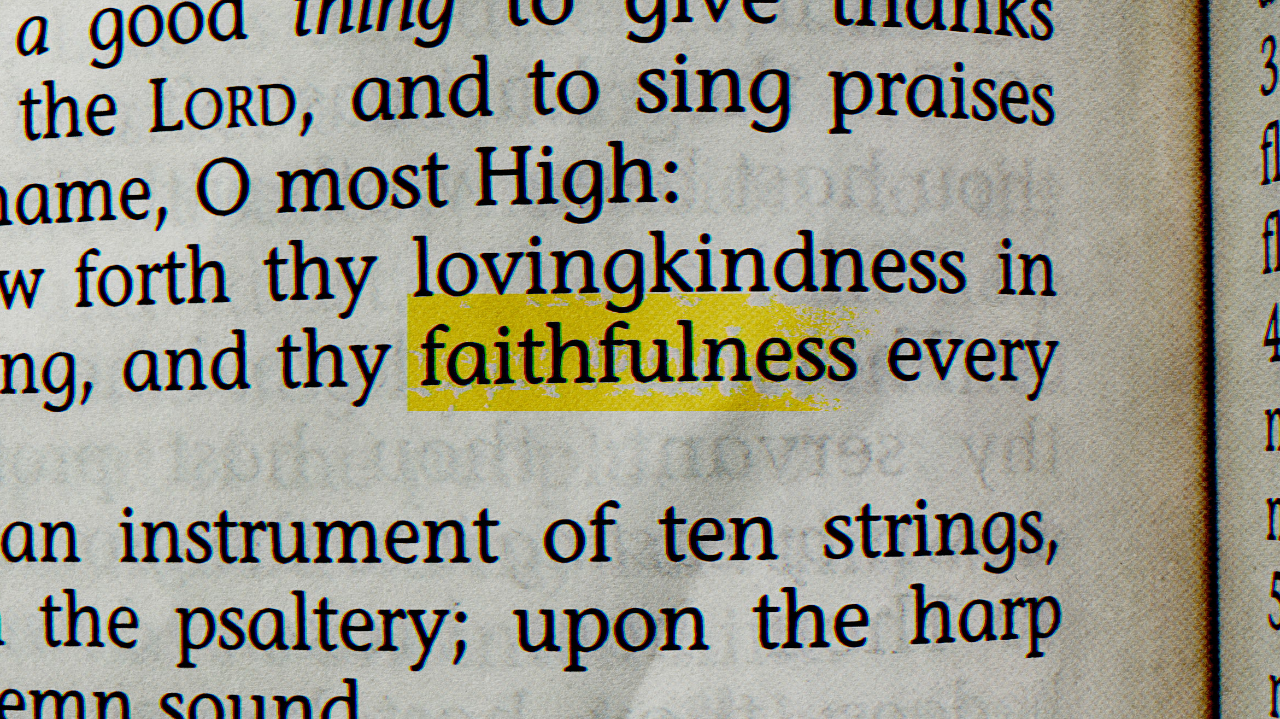
This week, we are diving into the next piece of fruit on Paul’s list: faithfulness.
The Culture of Options vs. True Faithfulness
We live in a culture that doesn't naturally teach or value faithfulness. We have more choices and opportunities than any generation before us, and our culture constantly tells us to keep every option open:
- Don't like your food? Go to another restaurant.
- Don't like your job? Find another one.
- Don't like your church? Find another one.
- Feeling strained in a relationship? End it.
When things get difficult, there’s almost always another exit ramp. But having endless options has caused many of us to lose sight of what faithfulness really is.
**Faithfulness says: *"I’m going to stay, even when culture says I don't have to."***
Because we swim in this culture of options, it's easy to lose sight of what biblical faithfulness looks like in our walk with God. We often default to thinking, "I'm faithful because I go to church on Sundays" or "I'm faithful because I believe in God." But God’s Word describes faithfulness as something far deeper than mere intellectual assent.
Faithfulness Is Belief in Action
Biblically, true faithfulness is never passive.
In James 2:17–18, James writes:
"So also faith by itself, if it does not have works, is dead. But someone will say, 'You have faith and I have works.' Show me your faith apart from your works, and I will show you my faith by my works."
Jesus illustrates this exact principle in Luke 6:46–49, asking why we would call Him "Lord, Lord" without doing what He says. He compares the person who hears His words and puts them into practice to a builder who dug deep and laid his foundation on solid rock. When the floodwaters rose, the house couldn't be shaken.
The Greek word Paul uses for faithfulness in Galatians 5:22 is pistis—a word that encompasses faith, belief, trust, and fidelity. Biblically, faith isn't just something we mentally hold onto; it's something that actively shapes how we live.
Look at the "Hall of Faith" in Hebrews 11:
- Noah believed God, so he built the ark.
- Abraham believed God, so he went.
- Moses believed God, so he obeyed.
Over and over again, genuine faith produces action.
Big Faithfulness Is Built in the Little Things
It’s easy to look at Hebrews 11 and think, "Being faithful means doing massive, heroic things for God." While God certainly calls people to big moments, faithfulness in the big things is always built in the little things.
Consider Rahab in Hebrews 11:31:
"By faith Rahab the prostitute did not perish with those who were disobedient, because she had given a friendly welcome to the spies."
In God’s grand plan of redemption, Rahab played a pivotal role. But her recorded act of faith started with something simple: showing hospitality and welcome.
Jesus gives us this foundational principle in Luke 16:10:
"One who is faithful in a very little is also faithful in much, and one who is dishonest in a very little is also dishonest in much."
What does being faithful in the little things look like in everyday life?
- Keep your word, even when it becomes inconvenient.
- Show up when you said you would.
- Send that encouraging text when someone comes to mind.
- Pray for the person you promised you would pray for.
- Spend time in God’s Word, even when you don't feel like it.
- Serve behind the scenes when nobody will notice.
- Choose patience with your spouse when you’re exhausted.
- Give your children your full attention when you're busy.
- Work with excellence when your boss isn't watching.
- Choose honesty when no one would ever catch you if you weren't.
- Keep showing up for the church, even when you feel like you don't have much to give.
Don't let the simplicity of these actions fool you—little things aren't always easy things. In fact, they are often the hardest because they require us to make the same faithful choice over and over again when we're tired, frustrated, or unmotivated.
When testing comes, James 1:2–4 reminds us that the testing of our faith (pistis) produces steadfastness (hupomonē—patient, cheerful endurance). As Paul echoes in Romans 5:3–5 and Galatians 6:9, endurance produces character, character produces hope, and in due season we will reap if we do not give up.
Rooted in a Faithful God
We don't strive for faithfulness in our own strength, nor do we do it merely out of obligation. Our faithfulness is a response to a God who is fundamentally faithful to us.
- "Know therefore that the LORD your God is God, the faithful God who keeps covenant and steadfast love with those who love him and keep his commandments, to a thousand generations." — Deuteronomy 7:9
- "For the LORD is good; his steadfast love endures forever, and his faithfulness to all generations." — Psalm 100:5
- "The steadfast love of the LORD never ceases; his mercies never come to an end; they are new every morning; great is your faithfulness." — Lamentations 3:22–23
Because God’s faithfulness is constant, we can stand firm:
"Let us hold fast the confession of our hope without wavering, for he who promised is faithful." — Hebrews 10:23
Looking to Jesus: The Ultimate Example
If you want to know what faithfulness looks like with skin on, look at Jesus.
Hebrews 3:1–2 calls us to "consider Jesus, the apostle and high priest of our confession, who was faithful to him who appointed him."
Jesus was faithful to the Father’s will, faithful to His mission, and faithful to the very people He came to save. His faithfulness wasn't convenient. It meant enduring misunderstandings, rejection, abandoning comfort, and ultimately walking toward the cross.
"Looking to Jesus, the founder and perfecter of our faith, who for the joy that was set before him endured the cross, despising the shame, and is seated at the right hand of the throne of God." — Hebrews 12:2
Jesus knew the cost, the pain, and the shame—and He still chose faithfulness for you and for me.
Taking the Next Step
As we walk through this season, let's ask the Holy Spirit to cultivate the fruit of faithfulness in our hearts. Let’s move beyond simply believing truth to actively living it out in the quiet, daily, small moments of obedience.
When Christ returns for the Harvest, there is no greater joy than hearing the words of our Master: "Well done, good and faithful servant" (Matthew 25:21).
Are you looking for a church family to walk alongside you in your faith journey?
Whether you're exploring Christianity for the first time or seeking a community to grow with, we would love to connect with you. Join us this Sunday at Blue Starr Church of Christ, or reach out to us today.